Mess Relay
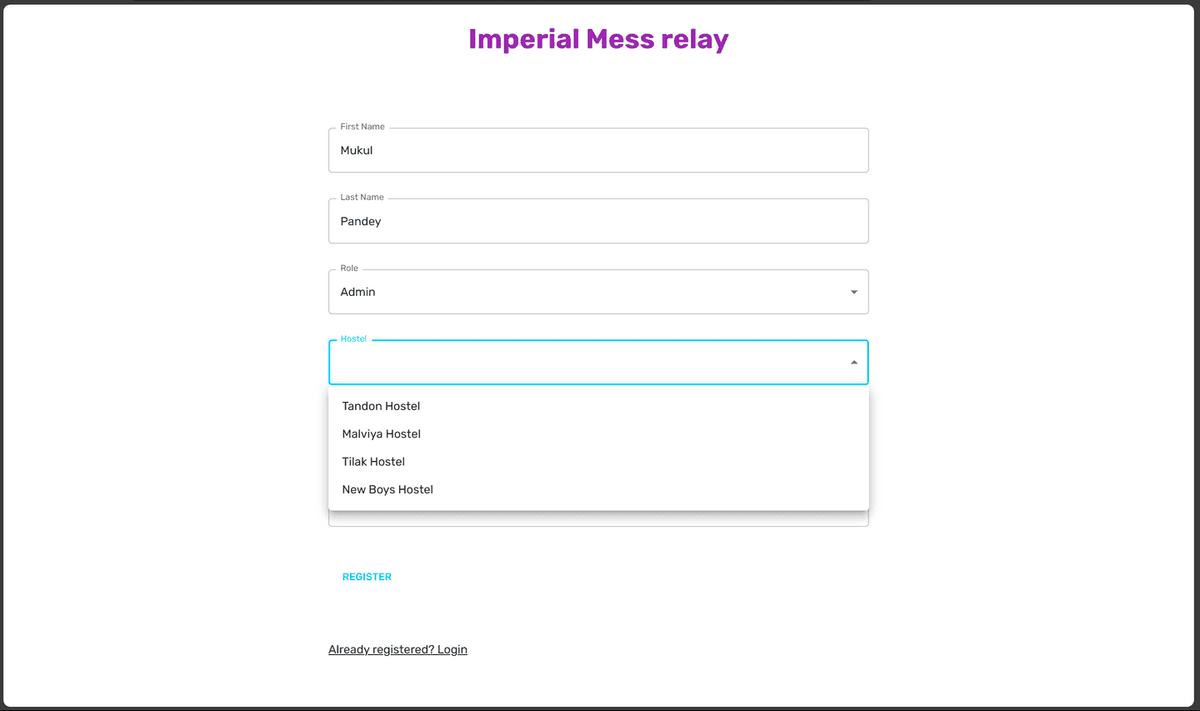
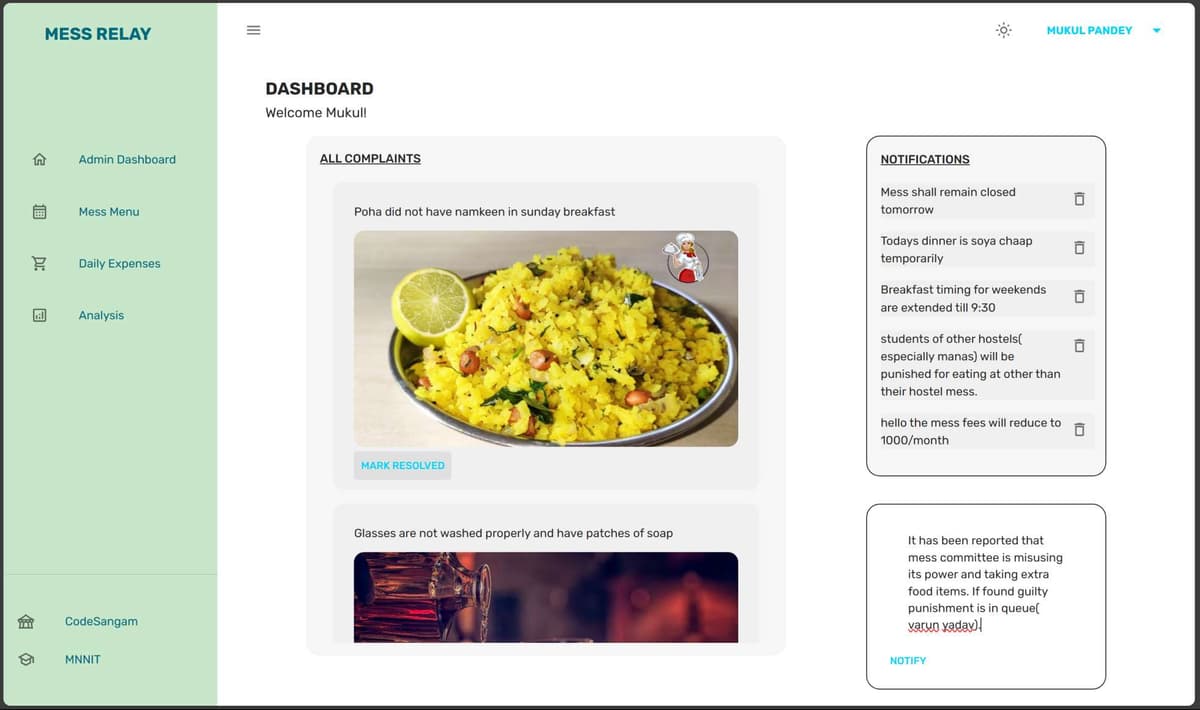
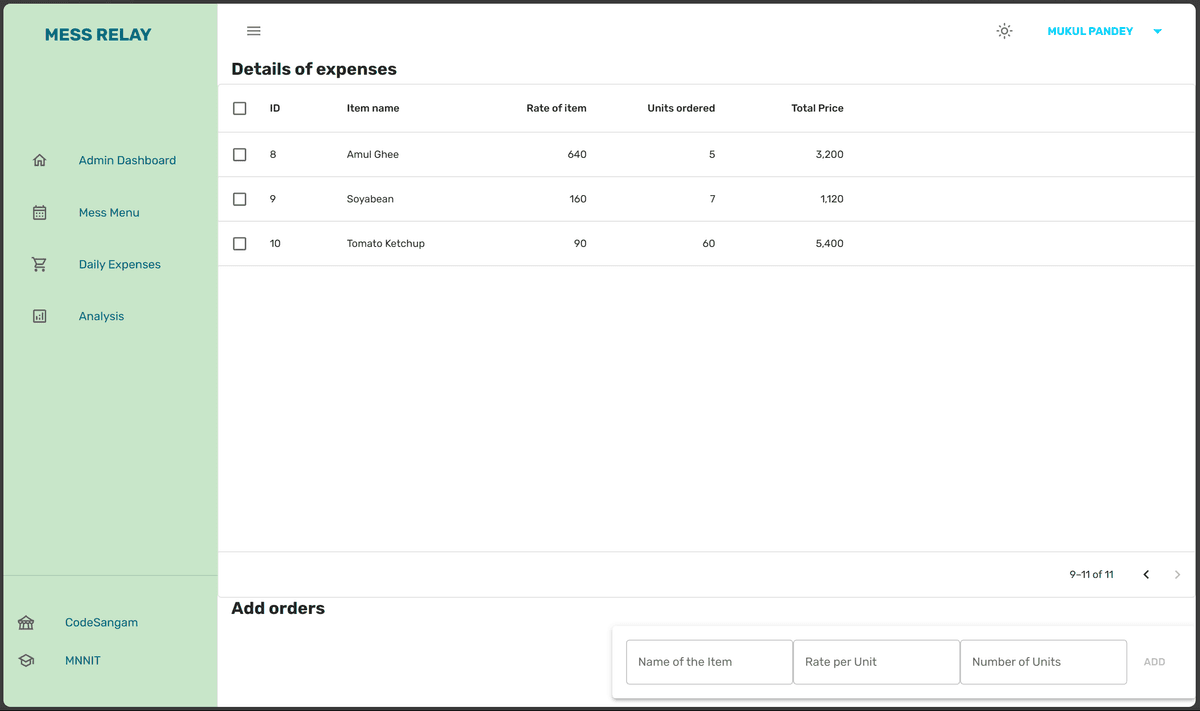
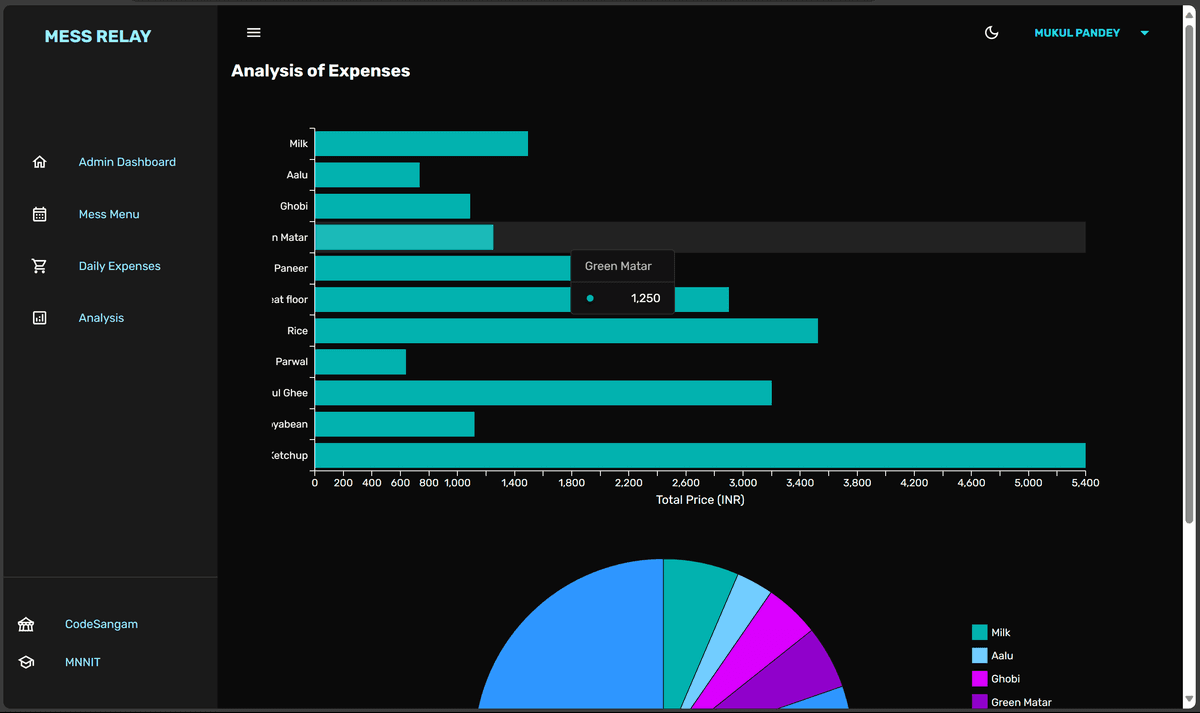
Mess Relay is a comprehensive hostel mess management web app with role-based authentication for students and admins. Students can post about the food served, give feedback, see others' posts, and upvote or downvote them. They can also rate their last meal and check the notice board for mess-related announcements. Admins have access to posts highlighting issues and can mark them as resolved. They can post notifications and manage daily mess expenses by entering details such as expense name, quantity, and price. Admins can also analyze expenses using graphs and pie charts for better financial oversight.
Tech stack
- Reac.js
- HTML
- Redux
- MaterialUI
- Javascript
- Node.js
- Express.js
- Multer
- MongoDB
Problem Solved
Managing a hostel mess efficiently and effectively is a significant challenge for both students and administrators. Students often struggle to provide and receive timely feedback about the meals served, leading to dissatisfaction and lack of communication. Additionally, keeping track of meal ratings, suggestions, and general mess-related notices can be overwhelming for both parties.
On the administration side, managing daily expenses and tracking issues reported by students is cumbersome, often resulting in delayed resolutions and financial mismanagement. Mess Relay addresses these challenges by providing a streamlined platform for students to communicate their feedback, rate their meals, and stay updated with mess notices. For admins, the app offers a powerful tool for managing expenses, tracking and resolving issues, and posting notifications, ensuring a more transparent and efficient mess management system.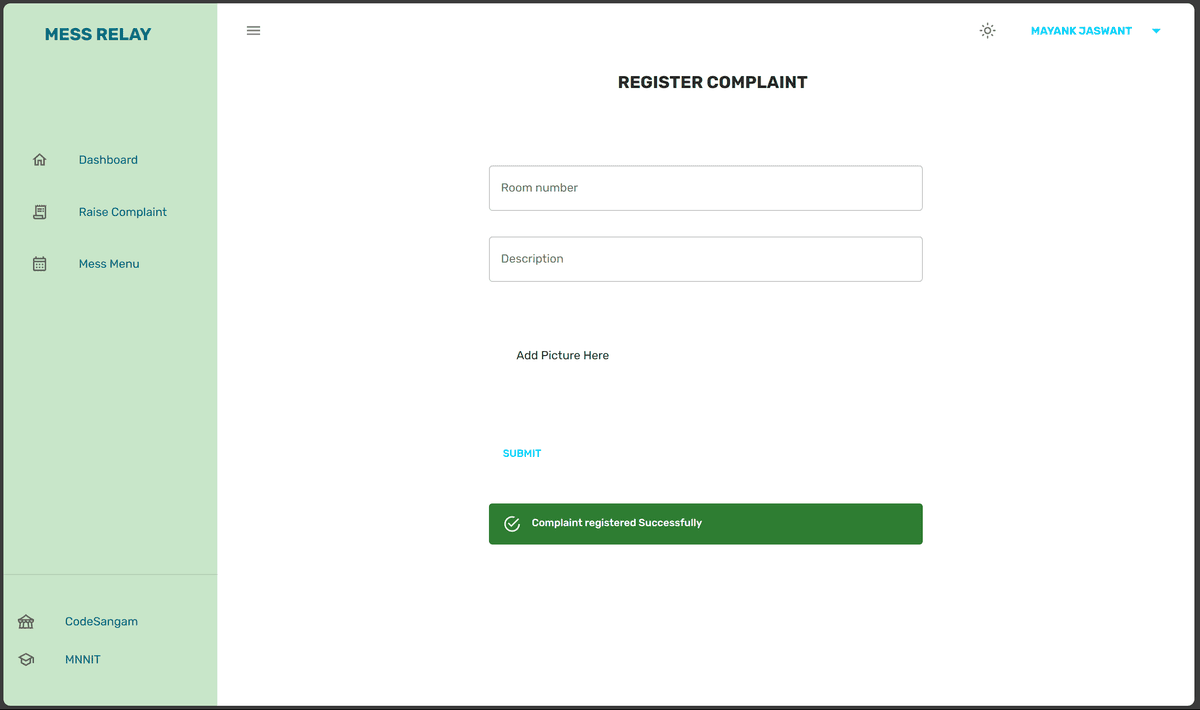
On the administration side, managing daily expenses and tracking issues reported by students is cumbersome, often resulting in delayed resolutions and financial mismanagement. Mess Relay addresses these challenges by providing a streamlined platform for students to communicate their feedback, rate their meals, and stay updated with mess notices. For admins, the app offers a powerful tool for managing expenses, tracking and resolving issues, and posting notifications, ensuring a more transparent and efficient mess management system.
Features
- 🔑Role-Based Access: The app supports different roles, with specific functionalities for students and admins:
- 👩🎓 Students: Can post about the food served, give feedback, upvote or downvote posts, rate their last meal, and view mess notices.
- 🛠️ Admins: Can view posts with issues and mark them as resolved, post notifications, manage daily expenses, and analyze data using graphs and pie charts.
- ⭐Feedback and Ratings: Students can share their opinions about meals and rate their dining experiences, giving admins valuable insights into the quality of the service provided.
- 🛠️Issue Resolution: Admins can monitor student posts for any reported issues and mark them as resolved once addressed, ensuring that problems are dealt with promptly.
- 📢Notice Board: A digital notice board keeps students informed about important announcements related to the mess, ensuring clear and timely communication.
- 💸Expense Management: The app allows admins to manage mess expenses by entering details like item name, quantity, and price. This feature helps keep track of daily costs and ensures accurate financial management.
- 📊Data Analysis: Mess Relay offers powerful data analysis tools, including interactive graphs and pie charts, to help admins visualize and understand expense trends, making it easier to optimize operations.
Challenges faced
- Setting Up Redux Toolkit Store: Managing the state in Redux Toolkit was complex, particularly in deciding when to delete, set, and persist state data effectively. Balancing the need for real-time updates with persistent storage required careful consideration to ensure a smooth user experience.
- Handling File Uploads: Implementing file upload system posed challenges, especially in configuring the upload process and securely storing the files. Ensuring that the files were correctly linked to the corresponding data while maintaining performance and security was crucial.
- Designing the Database Schema: Creating a database schema that was both efficient and scalable was a critical challenge. The schema had to accommodate various aspects of the app, from user roles and permissions to feedback and expense tracking, all while ensuring data integrity and quick access.
- UI Enhancements: Achieving the desired user interface behavior, such as properly managing flex grow in boxes and ensuring smooth scrolling, was challenging. Fine-tuning these elements to create a responsive and intuitive interface required detailed attention to design and layout.